Chassis canon
Toyota AE86 (Corolla Levin / Sprinter Trueno): The Complete Chassis Guide
AE86
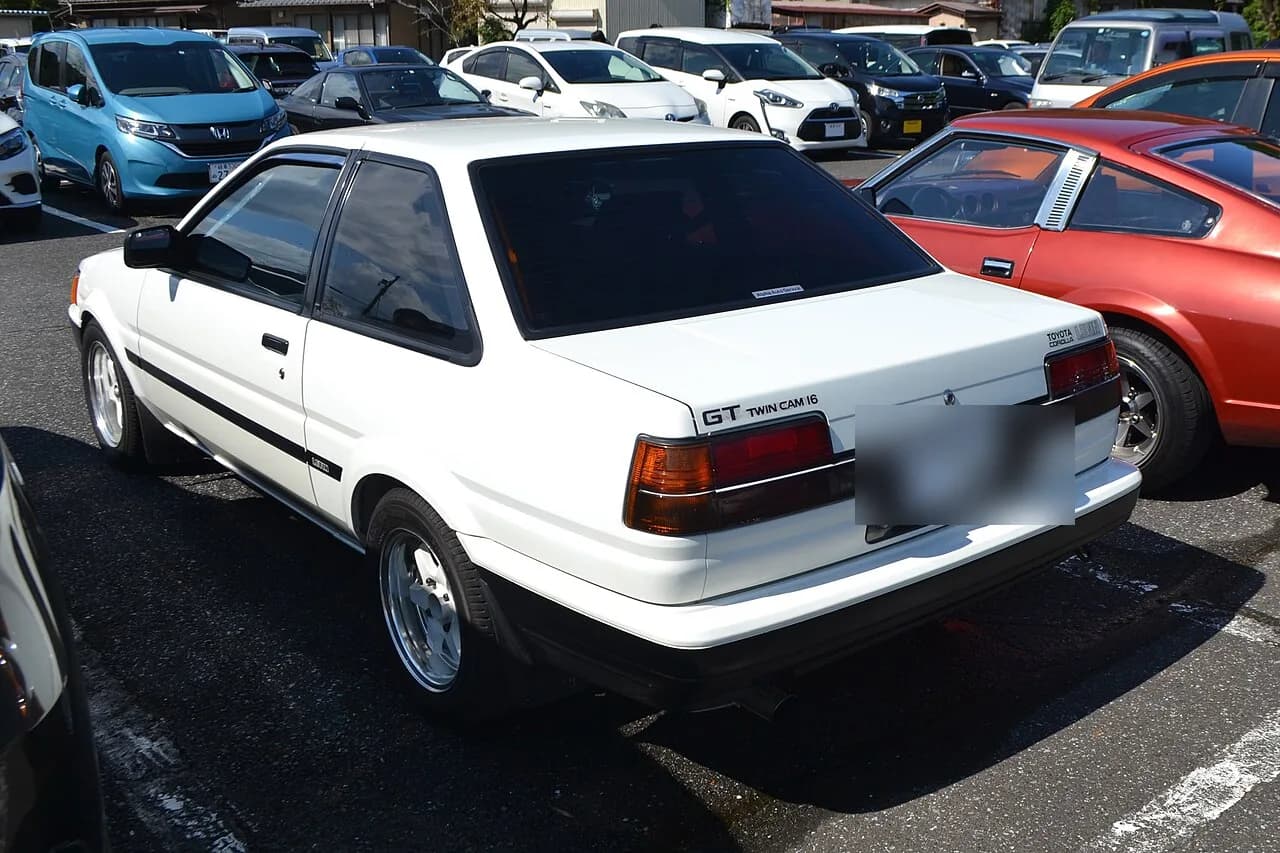
AE86, in one line
The AE86 is Toyota's rear-wheel-drive, fifth-generation Corolla/Sprinter coupe and liftback (1983–1987). Corolla Levin (fixed headlights) and Sprinter Trueno (pop-up headlights) badge the same mechanical car sold through two different Toyota Japan dealer channels. It's light, simple and rear-driven in a way almost nothing Toyota built afterward was — which is the whole reason it still matters.
Why this specific chassis, and not just "an old Corolla"
Toyota's own account of the car — published when it named the 2024 GR86 Trueno Edition after it — describes "a low curb weight of around 2,300 pounds and rear wheel drive powertrain and factory limited-slip differential" paired with "a snappy 5-speed manual transmission," a combination that made it a favourite of rally, circuit and touring racers well before it became famous for anything else. Independent sources put the lighter JDM Levin/Trueno variants closer to 950–1,000 kg (2,090–2,200 lb); the heavier US-spec GT-S carried more emissions and comfort equipment. The 4A-GE twin-cam itself was a first for a mass-production Corolla, developed with input from Yamaha and revving to a factory 7,500 rpm.
The drift-culture chapter (told as history, not an endorsement)
Keiichi Tsuchiya — later nicknamed the "Drift King" — ran an AE86 Trueno hard on Mount Usui's mountain pass in the mid-1980s, and footage of that driving is widely credited with introducing drifting as a distinct driving style rather than an accident. A decade later, Shuichi Shigeno's manga Initial D (serialised 1995–2013) made a white-and-black "panda" liftback Trueno world-famous as the car of its tofu-delivery-driver protagonist — Toyota's own materials cite both facts directly. They're history, not a suggestion: the mountain-pass driving that built this car's reputation is illegal on public roads everywhere it happened and everywhere you're reading this.
Buying considerations
- Rust is the real enemy at this age, not the engine — this is a car built between 39 and 43 years ago. Check the rear subframe mounts, floor pans and rocker panels before anything else.
- Confirm what's actually under the hood. A stock 4A-GE car is a different — and for import paperwork, differently documented — car from one with a later 20V "silvertop"/"blacktop" 4A-GE swap or something else entirely, which is common on cars built for drift use. Ask for service history, not just a claim of originality, especially if the EPA's 21-year original-configuration exemption (see our 25-year rule guide) matters to your paperwork.
- Levin vs Trueno is a styling and dealer-channel choice, not a performance one — don't pay a premium for one over the other on the belief that they're mechanically different.
- Original 4A-GE parts had been getting scarce, though Toyota's GR Heritage Parts program has reportedly begun reproducing some of them in recent years — worth checking before you assume a part is unobtainable.
- As with any used import, KUROGANE doesn't sell cars or vouch for specific sellers; verify chassis and engine numbers and paperwork yourself or through an independent inspection.
Import eligibility status
Every AE86 — the newest 1987 examples included — cleared the US federal 25-year exemption years ago, and clears Canada's 15-year threshold even more comfortably; age isn't the live question for this chassis the way it is for something like the R34. Originality is the question that matters here: the EPA's parallel 21-year emissions exemption requires the engine and emissions equipment to still be in factory configuration, and a great many AE86s in circulation have been modified. See the 25-year rule, explained for how the two federal clocks interact, and use the Import Eligibility Check if you want the exact month math for your own paperwork trail regardless.
Sources
FAQ
- Is the AE86 legal to import to the US now?
- Yes — every AE86 is already well past the federal 25-year age line (and Canada's 15-year one). The catch is originality: the EPA's parallel 21-year exemption requires the factory engine and emissions setup, so a heavily modified example may need extra paperwork that a stock one wouldn't. See our 25-year rule guide for how that works.
- What's the actual difference between a Corolla Levin and a Sprinter Trueno?
- Badge and headlights, not mechanicals. Levin (fixed rectangular headlights) and Trueno (pop-up headlights) were the same car sold through two different Toyota Japan dealer channels, both offered in GT and GT-Apex trim.
- What should I check before buying one?
- Rust in the rear subframe, floor pans and rockers first — this is a 1980s unibody. Then confirm the engine hasn't been swapped if originality matters to you, and get an independent inspection rather than relying on a seller's description.
This article is for information only and is not legal, import, or purchasing advice. Eligibility rules are described structurally — the vehicle's actual manufacture month, verified per chassis, is the final basis, and federal import and state/provincial registration are separate hurdles. Prices and availability change; confirm on the official source linked in the article before acting.